
PCGS CoinFacts - U.S. Coin Val
PCGSBooks & Reference
4.62.18K Reviews
- Version
- 3.1.11
- Installs
- 500.00K
- Age Rating
- Everyone
Screenshots
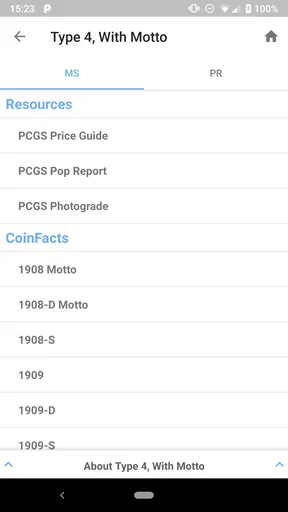
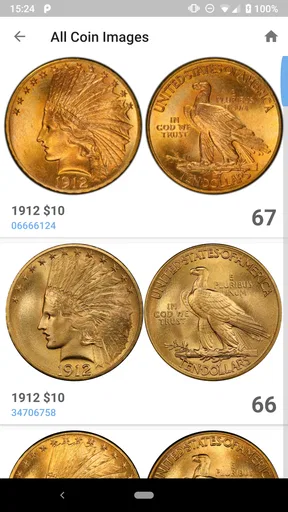
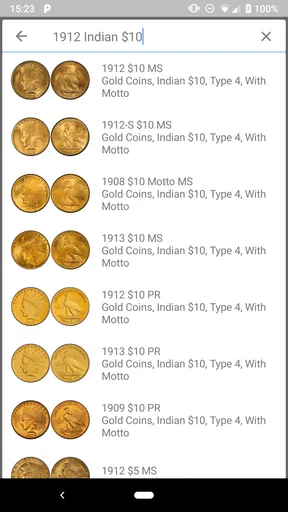
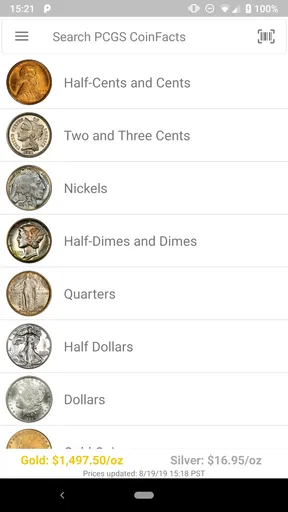
Our Review of PCGS CoinFacts - U.S. Coin Val
 Analysis by Appyee
When I look at a coin and wonder whether it is genuinely interesting or simply common, I want more than a quick search result. I want a focused reference that helps me identify the piece, understand why collectors care about it, and judge my next step without turning the hobby into guesswork. That is where PCGS CoinFacts - U.S. Coin Val makes its strongest impression. It is a Books & Reference app from PCGS built around a large catalog of United States coins, and I found its real value in the way it turns a vague question—“What is this coin?”—into a more organized research process.
The app is free, aimed at Everyone, and available for Android devices running version 6.0 or later. It has been around since January 28, 2016, and the current version is 3.1.11. Those details matter less than the experience itself, but they help explain why this feels like an established reference tool rather than a novelty made for casual browsing. With an average rating of 4.6 from around 22 thousand ratings and more than 500 thousand installs, it has clearly found an audience among people who want a dedicated coin resource on a phone.
Why the catalog is the app’s defining capability
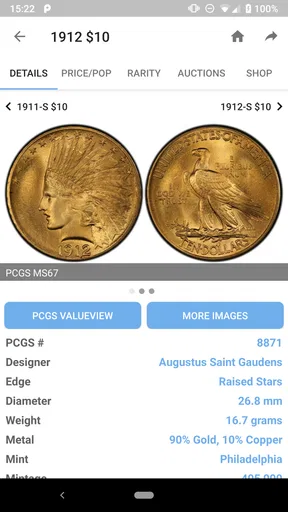
The central capability is its catalog of U.S. coins. I do not see it as a simple list of collectible objects; I use it more like a structured map of American coinage. Instead of relying on memory, a general search engine, or a forum post that may discuss a completely different version of the same coin, I can begin with the coin’s visible identity and narrow my research from there.
That distinction is important because small differences can change the collecting conversation. Date, mint mark, design type, denomination, and condition all influence how a coin should be understood. A broad web search often mixes ordinary circulation pieces with proof examples, commemoratives, errors, and certified coins. A specialized catalog gives me a better chance of staying inside the right family of coins before I start making assumptions.
The useful feature is not merely having many entries; it is having a dedicated path from identification to context. When I use the app well, I am not asking it to make a final buying or selling decision for me. I am using it to establish what I am looking at, learn which details deserve attention, and decide whether the coin is worth closer inspection.
That makes the app particularly appealing for collectors who handle inherited coins, mixed jars, old family albums, or purchases from flea markets. It is also useful when I already know the broad type but need a dependable reference point before comparing examples. The catalog approach is more purposeful than searching an image and hoping the first matching result is accurate.
Turning a coin into a research question
My preferred workflow starts with observation, not valuation. I first read the date and look for a mint mark, then compare the design and denomination with the relevant catalog entry. Only after that do I think about rarity, grade, or possible value. This order prevents one of the most common beginner mistakes: seeing a familiar date and immediately assuming that it must be valuable.
The app works best when I treat each entry as a starting point for verification. I compare the coin in my hand with the design details shown in the reference, paying attention to lettering, portraits, reverses, and the placement of small marks. A phone screen cannot replace a loupe or good lighting, but it can help me know exactly what I should be examining.
One practical tip is to keep the physical coin beside the phone rather than relying on memory. I can move between the catalog and the coin, checking one feature at a time. This is slower than typing a date into a search box and accepting the first answer, but it is much less likely to lead me into the wrong variety or period.
Another useful habit is to separate identification from condition. A worn coin can still be historically interesting, and a common coin in exceptional condition can deserve attention for a different reason. The app is most helpful when I use the catalog to identify the object first, then assess wear, damage, cleaning, and eye appeal separately. That separation keeps the research grounded.
What the app changes in everyday use
Imagine sorting through a relative’s small collection on a Sunday afternoon. There are coins from different decades, some loose and some in envelopes, with no notes explaining where they came from. A general search engine may produce a stream of auction pages and conflicting claims. With this app, I can work through the group systematically: identify the denomination, locate the date and mint mark, compare the design, and create a shortlist of pieces that deserve more careful handling.
The biggest benefit in that situation is not instant certainty. It is reduced confusion. I can avoid treating every old-looking coin as rare, while also avoiding the opposite mistake of discarding something before checking its details. The app gives the sorting process a structure that is easy to follow even if I am still learning the language of coin collecting.
I also find that this approach is useful before visiting a coin shop or show. I can use the catalog to prepare questions instead of arriving with only a vague hope that someone will tell me what I have. If a dealer gives an opinion that differs from my initial research, I have a clearer basis for asking why. That does not make me an expert, but it makes the conversation more productive.
For a collector building a personal inventory, the app can serve as a consistent reference while examining one coin after another. I would still keep my own notes elsewhere, especially for purchase history, provenance, photographs, and personal observations. The app’s role is strongest as the reference layer beneath those notes, not as a complete collection-management system.
Where it helps most—and where it does not
The best scenario is early-stage research on U.S. coins when I need a specialized reference in my pocket. It is especially well suited to identification, learning the distinctions between related issues, and deciding which pieces deserve deeper examination. A beginner can use it as a guided introduction, while an experienced collector can use it as a fast second reference during sorting.
It is less suitable when I need a full substitute for professional authentication or an in-person grading opinion. A catalog can help me recognize a coin, but it cannot remove uncertainty caused by altered surfaces, counterfeit pieces, harsh cleaning, hidden damage, or lighting that disguises wear. I would never treat a catalog match as proof that a coin is genuine or as a guaranteed selling price.
This is also not the ideal choice for someone whose main interest is foreign coinage. Its focus is United States coins, so a world-coin collector would likely need another reference designed around different countries, denominations, and historical systems. Likewise, someone who only wants a quick “is this worth anything?” answer may find the research process more involved than a casual value-search website.
Compared with a printed guide, the app is easier to carry and more convenient when I am sorting coins away from my desk. A book can be more comfortable for long reading and may encourage slower comparison, but it takes space and can be harder to update or search through quickly. Compared with general web searches, the app keeps me closer to a coherent collecting reference instead of scattered pages with different standards.
Compared with auction listings, it is a better place to begin identification. Auction results can show what particular coins have attracted in specific circumstances, but they are easy to misread as universal prices. The condition, certification, timing, presentation, and buyer interest all affect those results. I prefer to use the app to understand the coin first and treat marketplace information, when I consult it separately, as additional context rather than a verdict.
Three habits that make the catalog more useful
First, I use it before handling a potentially important coin too much. Once I have a likely identification, I know which details matter and can avoid rubbing the surface or cleaning it. That is a small but meaningful advantage for beginners, because well-intentioned cleaning can permanently reduce a coin’s appeal and complicate later evaluation.
Second, I compare similar entries instead of stopping at the first plausible match. A date alone is rarely enough. Looking at neighboring issues or related designs helps me notice differences in mint marks, lettering, and production details that I might otherwise overlook. This comparative step is where a catalog becomes more educational than a one-line search result.
Third, I use the app to decide when not to spend money. If a coin turns out to be a common issue in ordinary condition, the information can prevent an unnecessary grading submission or an inflated purchase. That is a real benefit: a reference tool does not need to uncover a treasure every time to save money and improve judgment.
A fourth habit is to photograph the coin separately from the research. I take clear images under neutral light and record the identifying details in my own notes. That way, if I later ask a collector or dealer for a second opinion, I can show the actual piece and explain how I identified it. The app supports that workflow, but I do not confuse it with a permanent photographic archive.
The tradeoffs behind a focused reference
The app’s specialization is both its strength and its boundary. Because it concentrates on U.S. coins, it feels more relevant than a broad reference when that is exactly what I am studying. At the same time, it does not serve every collecting interest equally. Anyone collecting tokens, medals, banknotes, or coins from many countries will need to combine it with other resources.
There is also a learning curve. Beginners may open the catalog expecting a single definitive number and instead encounter the more complicated reality of numismatics: the same basic issue can have very different appeal depending on condition, originality, rarity, and market demand. I consider that a healthy limitation rather than a flaw, but it means the app rewards patience.
Another tradeoff is that a phone reference encourages quick conclusions. It is tempting to see a familiar image, accept a match, and move on. I get better results when I slow down and verify the mint mark, design, and physical condition. The app can organize my research, but it cannot replace careful observation. In fact, its convenience makes disciplined habits even more important.
Users should also keep expectations realistic about valuation. The name and subject naturally suggest money, but a catalog reference should not be treated as an automatic appraisal. If I am considering a significant purchase, selling a potentially valuable coin, or dealing with a suspected counterfeit, I want independent expertise as well. The app helps me ask better questions; it does not eliminate the need for judgment.
Who will get the most from PCGS CoinFacts
I would recommend it first to new U.S. coin collectors who want one focused place to begin learning. It gives them a more sensible alternative to guessing from social media posts or assuming that age equals rarity. It is also a good fit for families sorting inherited coins, casual collectors preparing for a shop visit, and experienced hobbyists who want a portable reference while examining pieces away from home.
The free price makes experimentation easy. I can install it, test the catalog against coins I already own, and decide whether its research style suits me without committing to a purchase. The Everyone content rating also makes it appropriate for shared family learning, including a parent helping a child understand dates, designs, and careful handling.
I would be more cautious about recommending it as the only tool for advanced buying decisions. Serious collectors may want specialized references for particular series, detailed grading education, certification verification, collection records, and current market analysis. The app can remain useful in that toolkit, but it should be one layer rather than the entire process.
Its audience size is reassuring without being the main reason to use it: the app has about 2.2 thousand written reviews alongside its broader rating base, which suggests that many users have taken the time to comment on the experience. I pay more attention to whether the catalog fits my needs, but that level of adoption makes it easier to view the app as a practical hobby resource rather than an obscure experiment.
My final recommendation
After using it as a coin-identification and research companion, I see PCGS CoinFacts - U.S. Coin Val as most valuable when I resist the urge to ask it for an instant price. Its better role is helping me identify what I have, compare it with related U.S. issues, and decide what deserves further attention. That process is more reliable, more educational, and ultimately more useful than chasing a dramatic valuation.
PCGS is the developer, and the app’s long availability, free access, focused subject, and current version make it an easy recommendation for anyone beginning or organizing a U.S. coin hobby. I would skip it if my collection is mainly foreign coins or if I want a full inventory and marketplace platform in one place. For everyone else, especially someone holding a confusing pile of American coins and looking for a sensible first step, this is a practical reference worth keeping on the phone.
Verdict
Strengths of PCGS CoinFacts - U.S. Coin Val
- Covers a wide range of U.S. coins and historical issues.
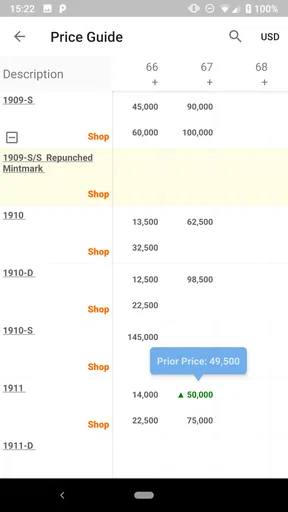
- Includes auction records to help estimate market value.
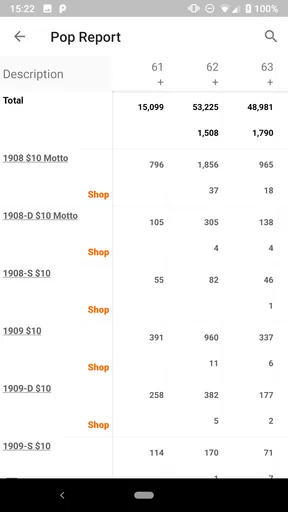
- Useful population data shows coin rarity by grade.
- Search tools make it easy to find specific coin types.
- Regular updates can keep pricing and census information current.
Limitations of PCGS CoinFacts - U.S. Coin Val
- Some advanced pricing and research features may require a subscription.
- Values can vary significantly from actual local offers or sales.
- The large catalog may feel overwhelming for beginners.
- Requires internet access for many databases and current records.
- Limited usefulness for non-U.S. coins and international collectors.
Similar Picks in This Category
View All
Google Play Books & Audiobooks
Google LLC4.7

네이버 - NAVER
NAVER Corp.3.5

Wattpad - Read & Write Stories
Wattpad.com3.7

King James Bible - Verse+Audio
Ozion4.8

Bible Offline-KJV Holy Bible
Bíblia Offline4.9

Amazon Kindle: Reading App
Amazon Mobile LLC4.8
Frequently Asked Questions
What is PCGS CoinFacts, and what can I use it for?
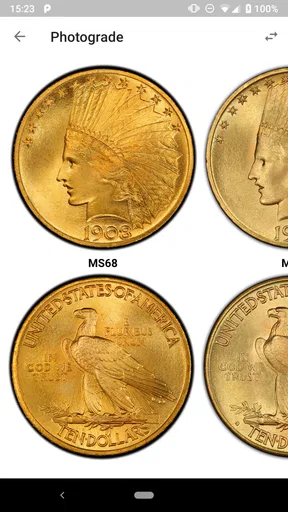
PCGS CoinFacts is a reference and valuation app for United States coins. It provides coin images, identification details, historical information, auction records, price guidance, population data, and grading-related resources. After exploring the app, I found it most useful for researching a coin before buying, selling, submitting it for grading, or comparing it with similar examples in a collection.
Can PCGS CoinFacts accurately tell me how much my coin is worth?
The app can provide helpful market information, but it should not be treated as a guaranteed appraisal. A coin’s value depends on its exact date, mint mark, variety, condition, certification status, eye appeal, rarity, and current demand. Price guides and auction results are useful starting points, although an in-person evaluation or professional appraisal may be necessary for valuable or unusual coins.
Does the app identify coins using the phone’s camera?
PCGS CoinFacts is primarily a research and reference tool rather than a fully automatic coin-scanning service. You generally need to search by denomination, year, mint mark, or other identifying information and then compare your coin with the available photographs and descriptions. Good lighting, clear images, and careful examination of lettering, dates, mint marks, and design details can improve your results.
Is PCGS CoinFacts useful for beginners as well as experienced collectors?
Yes, beginners can use the app to learn basic terminology, compare coin designs, review grading information, and understand why certain issues are more valuable than others. Experienced collectors may appreciate its extensive reference material, population reports, auction data, and variety information. However, new users may need time to understand grading standards and interpret market figures correctly.
Do I need a paid subscription or PCGS membership to use PCGS CoinFacts?
Many of the app’s core reference features can generally be accessed without paying for every individual search, but availability of certain tools, account features, services, or PCGS-related benefits may depend on current policies and platform requirements. Before downloading, check the latest Google Play Store or Apple App Store listing, including subscription details, in-app purchases, supported devices, and any membership limitations.
